
Expert consulting services for the Investment
management industry
Investment Performance Reconciliation
What is Investment Reconciliation?
Investment reconciliation is a critical accounting process that involves comparing internal records of investment transactions and holdings with external statements provided by financial institutions or counterparties. This meticulous process ensures that the records reflect the true value of investments and that they are accurately reported.
Investment reconciliation refers to the process of comparing and matching internal investment records (e.g., trades, positions, cash flows) against external data sources such as custodians, brokers, fund administrators, or market‑data providers. The purpose is to verify accuracy, identify and resolve discrepancies, and ensure that investment portfolios are correctly recorded and reported. Ensuring the accuracy of investment records is a critical aspect of financial management for any business.
Shadow Accounting - What is it?
Efficiently reconciling your Firm’s accounting data against its fund administrator’s data. Reconciliation plays a key role in shadow acocunting because it ensures the fund administrator’s trading records (transactions, positions, cash balances, NAV, total equity, and P&L) match those of the investment manager or hedge fund. Shadow accounting is basically ‘duplicating’ your Fund Administrator or Custodian’s records, on your Firms own internal system. Shadow accounting allows your Firm to be in control of its own data, for a variety of Performance, Reporting and Investment Analytics reasons.
Benefits of Reconciliation
Instills confidence
Reconciliation helps guarantee the fund's books and records are accurate. When investment accounting data is correct, you can demonstrate the fund's performance and other information can be trusted.
Provides compliance and regulatory safeguards
Reconciliation is also important for ensuring compliance with regulator requirements. Reconciliation allows you to monitor the fund's compliance with laws and regulations that confirm the fund is operating both legally and ethically.
Helps control risk
Reconciliation is a critical part of a firm’s risk management as it helps to identify and correct discrepancies in the fund's books and records. By performing reconciliation daily, you can reduce the risk of loss while protecting the fund's assets.
Increases transparency
Reconciliation helps to promote transparency and accountability within the fund. By reconciling the fund's book and records with those of your fund administrator, you can give your stakeholders and investors a clearer view of the fund's financial situation.
Supports decision-making
Reconciliation helps provide the information firms need to make informed decisions about the fund's operations and management. Having accurate information about the fund's financial picture allows you to think critically about the fund’s future, including changes to investment strategy, fund domiciling, and counterparties.
Enhancing investment fund management
Reconciliation is a critical part of shadowing your fund administrator and provides many important benefits for investment managers. By ensuring the accuracy and completeness of the fund's books and records, you can ensure compliance, improve risk management, increase transparency, gain better information for decision-making, and make investment fund management more effective.
Reconciliation Process
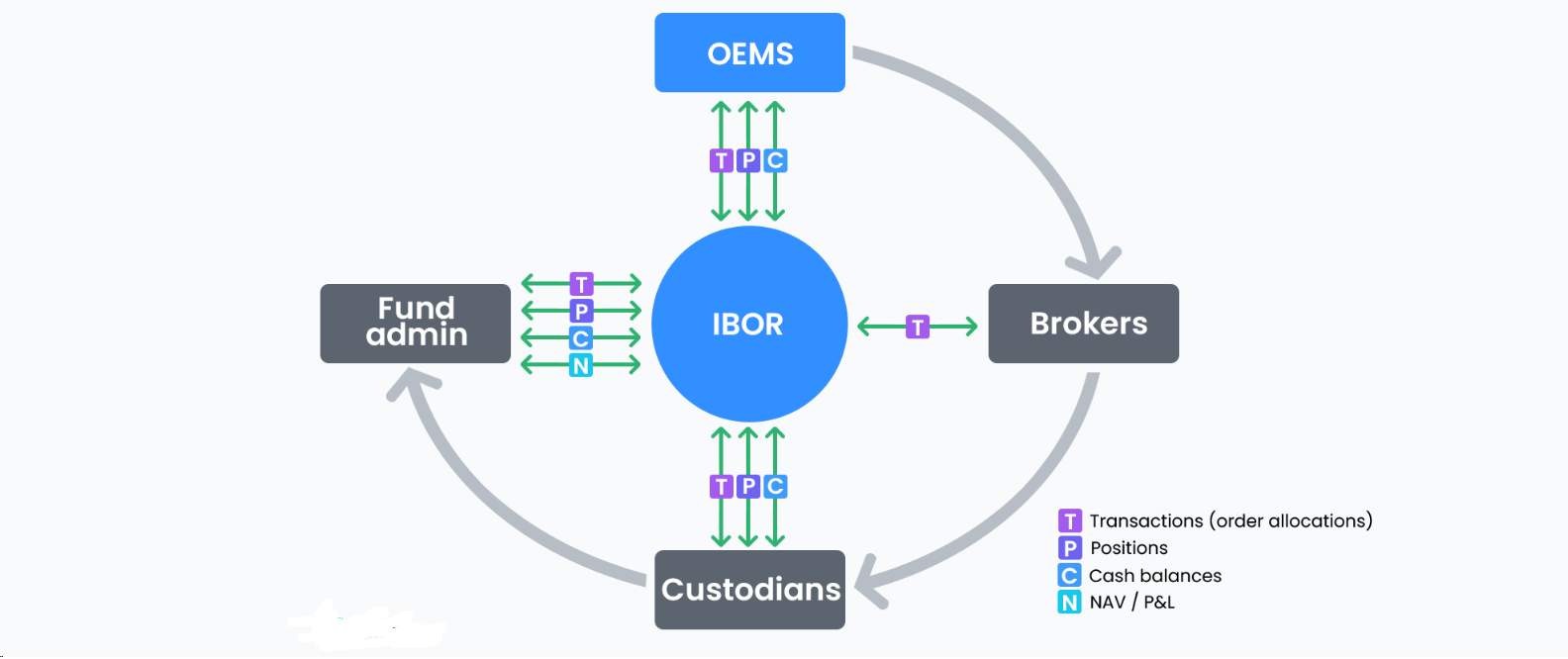
Import data
The first step is to gather data from different sources, such as internal systems and external partners. This data is typically imported into the investment reconciliation software by parsing CSV files dropped on an sFTP. Sometimes, the software must compare three data sets instead of just two, so it must be flexible enough to handle this.
Transform data
Once the data is imported, you must transform it into a table format – identical for each data set. Features you need for this include:
Custom columns
Filtering
Aggregation
Data type conversion
Data transformation features are where most investment reconciliation systems fall short, forcing you into manual steps in spreadsheets. If you have to transform data manually, that defeats the purpose of automation.
Reconcile data
After the data is transformed, the software matches it line-by-line according to your set rules, such as matching by instrument identifier and fund. It then compares values on each line (e.g. market value of a position) against predefined tolerances.
Resolve discrepancies
Finally, any errors or discrepancies need to be investigated and resolved. The breaks and their respective resolutions are typically recorded in an audit trail for internal control purposes.
reconciliation Challenges
Despite the benefits, the process has several challenges especially in modern investment management:
Data complexity and Variety
Many asset classes (equities, fixed income, derivatives, alternatives) with different pricing, settlement and corporate action rules.
Multiple data sources/formats
Internal systems, custodians, brokers, fund accountants each may provide data in different formats or frequencies.
Timing Differences & Settlement Lags
Trades may settle on different dates, income/events may be captured differently leading to mismatches.
Manual processes and spreadsheet risk
Heavy reliance on Excel or manual matching increases risk of errors.
High volume, real‑time demands
Growing transaction volumes and demands for near‑real‑time data increases workload and complexity.
Governance and control requirement:
Need for clear tolerance levels, escalation of exceptions and formal control frameworks.
Types of Reconciliations
Within the investment management / finance environment, there are several specific types of reconciliation, each addressing a particular data domain. Some of the key types include:
Trade Reconciliation
Matching executed trades between front‑/middle‑office and back‑office/custodian records.
Position/holding reconciliation
Verifying that internal records of securities held match with custodian statements/third‑party records.
Cash Reconciliation
Ensuring cash balances, transfers and flows in internal records match bank/custodian statements.
Corporate actions & income reconciliatioN
Confirming dividends, interest, fees, splits, and other income/expenses are captured correctly.
Valuation Reconciliation
Ensuring the market value of holdings aligns between internal records and external pricing sources.
Ledger / Accounting Reconciliation
Matching accounting ledgers (ABOR) with custodian or fund administrator records to confirm NAV/financial close.
Multi‑asset / Derivatives Reconciliation
More complex asset classes (derivatives, alternatives) require specialised reconciliation logic due to pricing and settlement complexity.
Reconciliation Best Practices
To maximize return on effort and ensure robust processes, these are best practices finance and accounting teams should follow:
Implement daily (or frequent) reconciliation rather than waiting until month‑end. Early detection = cheaper resolution.
Define clear tolerance levels and matching rules – make sure the business and operations teams agree on what constitutes a match vs exception.
Automate repetitive tasks – use tools to ingest, cleanse, match and flag issues. Free up human analysts for exceptions and root‑cause.
Categorize and prioritize exceptions – separate critical breaks (settlement failures, pricing errors) from low risk or immaterial differences.
Track and report on metrics – aged break count, closure time, root‑cause categories; use these to drive continuous improvement.
Establish root‑cause analysis – not all breaks are created equal; understanding recurring issues helps improve upstream processes (data capture, trade entry).
Maintain a strong audit trail and documentation – for compliance, external audit, internal governance.
Engage cross‑functional teams – operations, accounting, portfolio management and IT must work together on reconciliation design and issue resolution.
Continuously review and refine rules – asset classes evolve, new data sources arise; reconciliation logic must evolve to stay effective.
Leverage a platform approach – centralize reconciliation processes across multiple business lines or asset types for economies of scale and better control.
Reconciliation White Papers
Portfolio Reconciliation in Practice
Author > International Swaps and Derivatives Association
Best Practices in Reconciliation
Author > SS&C